
High-Performance Rubber Conveyor Belts for Bulk Material Handling
A SIG & SAMMI Success Story in Northern Europe’s Largest Limestone Quarry

For more than three decades, SIG has been a leading European manufacturer of high-performance rubber conveyor belts, supplying advanced solutions for heavy-duty bulk material handling.
A remarkable example of this expertise is the long-term collaboration with SAMMI Srl, an Italian OEM specializing in the design, installation, and commissioning of complete conveyor systems. Between 2009 and 2011, the two companies jointly executed a major project for the largest limestone quarry in Northern Europe, involving the full engineering, construction, and installation of two complete conveyor systems.
This case study highlights the technological value of the project and the strategic role of SIG’s high-performance rubber conveyor belts in ensuring reliability, durability, and efficiency under extreme operating conditions.
A Fully Engineered Project of Two Complete Conveyor Systems
In 2009, SAMMI began the complete design of two independent conveying lines. In parallel, SIG was commissioned to supply heavy-duty rubber conveyor belts engineered according to the project’s mechanical, environmental, and performance requirements.

1. Conveyor System for Material Transfer to the New Stocking Area
The first system was designed to transport limestone directly from the active mining front to a newly built 50,000-ton covered stocking facility developed by SAMMI. Inside this building, a custom-designed tripper car ensured uniform and continuous material distribution while protecting the material from adverse weather and preserving its quality.
2. Inclined Conveyor System Feeding the Crushing Plant
The second conveyor system was engineered to move the stocked limestone uphill toward the crushing plant. This inclined route required conveyor belts with:
- high tensile strength
- excellent abrasion resistance
- minimal elongation
- long service life in continuous operation
SIG supplied two different types of abrasion-resistant rubber conveyor belts, each selected according to precise operating parameters and load characteristics.
Technical Specifications of SIG Rubber Conveyor Belts
EP Textile Belt—Extra Abrasion Resistant
- Model: TEXTER 800/4
- Tensile Strength: 800 N/mm (4 plies)
- Rubber Covers: 8 + 4 mm, extra abrasion resistant (DIN W)
- Width: 1400 mm
- Length: 488 m
This textile belt ensures excellent flexibility, high-impact resistance, and reduced energy consumption during heavy-duty operation.
Steel Cord Belt – Extra Abrasion Resistant
- Model: SIDERFLEX ID1600
- Steel Cord Construction: 7×7 cables
- Tensile Strength: 1600 N/mm
- Rubber Covers: 8 + 4 mm, DIN W abrasion-resistant compound
- Width: 1200 mm
- Length: 779 m

The steel-cord carcass guarantees maximum dimensional stability, low elongation, and outstanding performance for long-distance and steep-incline conveying.
Project Results and Customer Benefits
The integration of SAMMI’s engineering expertise with SIG’s advanced rubber conveyor belts delivered significant operational advantages for the quarry operator:
- Improved material storage conditions, thanks to the fully enclosed stocking building that protects limestone from weather damage.
- Higher conveying efficiency, through the use of premium rubber belts designed for severe-duty applications.
- Continuous and reliable material flow, with reduced downtime during both loading and conveying phases.
- Lower lifecycle costs, enabled by the high durability of SIG belts and the robust design of the overall conveyor systems.
Conclusion
This project stands as a benchmark example of Italian excellence in the bulk material handling industry. The integration of SAMMI’s mechanical engineering expertise with SIG’s advanced rubber conveyor belt materials demonstrates the performance that can be achieved when two leading rubber conveyor belt manufacturers collaborate on complex, high-capacity applications.
What Are Rubber Conveyor Belts Used For?
Rubber conveyor belts are essential components for the continuous transport of bulk materials such as limestone, coal, aggregates, cement raw materials, and industrial minerals. Their main function is to move bulk goods from a loading station to an unloading point—often over long distances—eliminating or drastically reducing the need for trucks, fixed infrastructures, and extensive civil works.
Rubber conveyor belts are essential components for the continuous transport of bulk materials such as limestone, coal, aggregates, cement raw materials, and industrial minerals.
Their main function is to move bulk goods from a loading station to an unloading point—often over long distances—eliminating or drastically reducing the need for trucks, fixed infrastructures, and extensive civil works.This makes them a cost-effective and environmentally friendly solution for modern material handling systems.
Although widely used in traditional industrial environments such as quarries, mines, cement plants, and steel factories, rubber conveyor belts are not limited to standard configurations.
They can also be installed on mobile floating transfer stations, enabling safe and efficient cargo handling between vessels in open sea conditions. Often, plant design constraints or challenging geographical morphology require advanced and tailor-made conveyor solutions. For example:
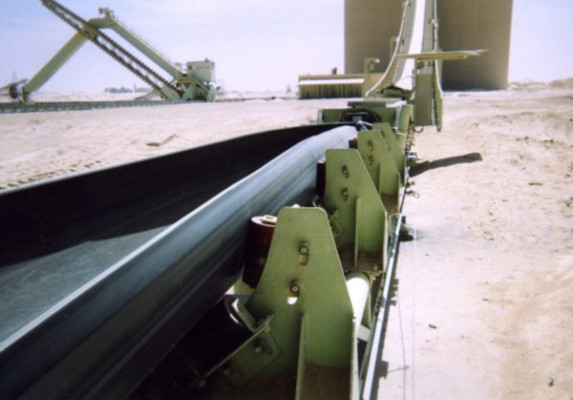
- Pipe conveyors are the best solution to avoid dust or material spillage and to face curvy areas inside conveyor systems with a compact plant design.
- FLEXOBORD belts (with cleats and sidewalls) are ideal for steep-incline conveying—up to 90°—and are commonly used in steel mills for furnace feeding.
- FERBAG (steel-cord carcass) and TEXBAG (textile carcass) rubber belts are designed for VACKEM-style curved conveyor systems, engineered to overcome extreme curves or mountainous terrain.
Which Materials Are Used in Rubber Conveyor Belts?

Rubber conveyor belts are engineered with a precise structure to ensure optimal mechanical performance and durability in bulk material handling. They consist of an inner carcass—made of either steel cords or textile (EP) plies—combined with top and bottom rubber covers that provide abrasion, chemical, and environmental resistance.
Steel Cord Conveyor Belts
Steel cord belts are designed for long distances & high tensions, offering minimal elongation and maximum structural stability. The steel cords, typically brassed, adhere perfectly to the rubber covers. SIG produces steel cord belts in two main constructions:
- 7×7 closed construction: Cords are fixed inside the carcass, providing high rigidity and excellent impact resistance.
- 4×7 open construction: Cords have limited mobility inside the carcass, allowing longitudinal flexibility and controlled elongation.
Textile (EP) Conveyor Belts
Textile belts consist of two or more layers (plies) of EP fabric, where each ply has a polyester warp and nylon weft, giving the belt flexibility, good impact resistance, and low elongation. SIG uses special adhesion layers between plies to enhance durability, tear resistance, and overall structural integrity. Textile belts can be produced with up to six plies, making them ideal for medium-duty to heavy-duty applications.
Rubber Covers
The top and bottom rubber covers provide chemical and physical protection. The top cover is usually thicker, as it is exposed to direct material contact, while the bottom cover protects the inner carcass and ensures stable operation.

For elevator belts or specific symmetrical designs, both covers can have equal thickness. Depending on the application and handled material, SIG offers a wide range of specialized rubber compounds, including:
- Abrasion-resistant
- Heat-resistant
- Oil-resistant
- Self-extinguishing or flame-retardant
- Custom combinations for ATEX or specialized environments
Summary
By carefully selecting the appropriate carcass type, ply construction, and rubber compound, SIG rubber conveyor belts are tailored to provide:
- maximum performance
- durability
- reliability
whether used in standard quarry systems or in highly specialized conveyor configurations.
SIG: Italy’s Leading Rubber Conveyor Belt Manufacturers Delivering High-Tech Solutions Worldwide
SIG is the only Italian manufacturer of rubber conveyor belts, operating its own production plant in Gorla Minore, near Milan. Since 1928, SIG has been designing and producing high-quality rubber conveyor belts in Italy while supplying technologically advanced solutions to customers all over the world.
For nearly a century, the company has built a solid reputation for meeting customer needs and exceeding expectations through innovation, reliability, and consistent product performance. Thanks to its in-house R&D technical laboratory, SIG has continually engineered advanced carcass constructions and cutting-edge rubber compounds while pioneering products capable of meeting the needs of an ever-evolving international market—often characterized by tough, highly specific applications.
What are the different types of rubber belts?
Today, SIG offers a wide range of high-technology conveyor solutions, including:
- pipe (tubular) rubber conveyor belts (Pipex and Piflex)
- sidewall belts with cleats (Flexobord)
- steel-cord elevator belts (Elemet)
- textile-carcass rubber conveyor belts (Eletex)
All of those are designed with specialized rubber compounds tailored to different industries and operating conditions.
Why waste time looking elsewhere?
With decades of expertise and a passion for innovation, SIG remains the trusted partner for companies seeking high-performance rubber conveyor belt solutions. Contact our sales department by phone or by sending your request through the contact modal.
Latest news:
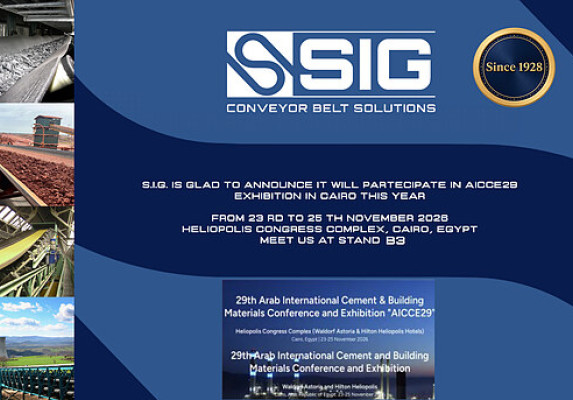
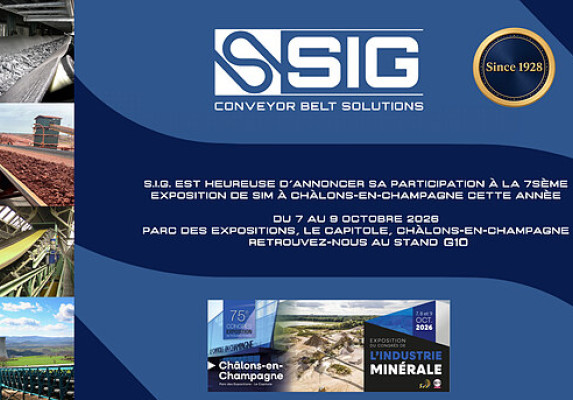
AICCE Exhibition in Cairo: 29th edition
10 Sep 2026
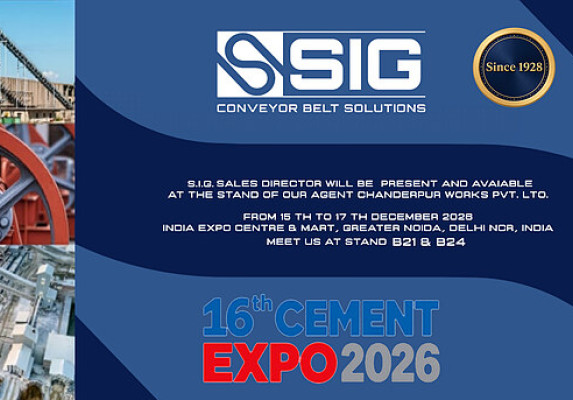
Cement Expo Exhibition in India: 16th edition
10 Sep 2026
CONTACT US
Discover more about our products
Would you like to have more information about our items?
Fill in the contact form and send your inquiry. One of our experts will get in touch with you as soon as possible.